
Why AI Data Centers Need Cleanroom Protection in 2026
The rapid growth of artificial intelligence, large language models, and high-performance computing is accelerating the construction of AI data centers around the world. In 2026, more companies and governments are investing in high-density GPU computing facilities to support AI training, cloud computing, and intelligent applications.
Many people still believe that cleanrooms are mainly used in semiconductor factories, pharmaceutical facilities, and electronic manufacturing plants, while data centers only need cooling and basic dust control.
However, this understanding is changing.
Modern AI servers equipped with advanced GPUs generate significantly higher heat loads, require stronger airflow, and operate continuously under heavy computing workloads. These characteristics create much stricter requirements for the surrounding environment.
An AI Data Center Cleanroom is becoming an important part of next-generation computing infrastructure, helping protect expensive hardware, improve operational stability, and reduce unexpected downtime.
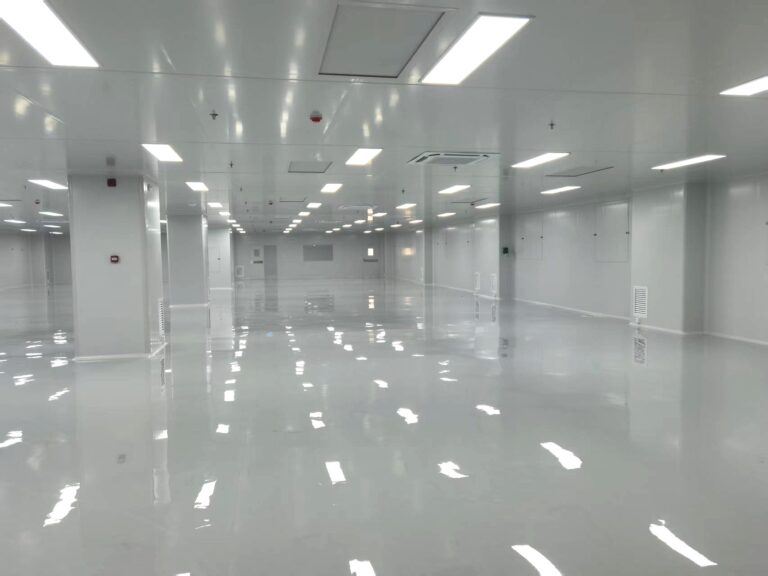
Traditional Data Centers vs High-Density AI Data Centers: A Major Environmental Difference
Traditional IDC facilities are mainly designed for web hosting, cloud services, storage, and conventional computing applications.
A typical traditional server rack may consume around 3-5kW of power. The internal airflow demand is relatively moderate, and basic ventilation systems with standard filtration are often sufficient for daily operation.
However, AI data centers operate under completely different conditions.
High-performance GPU servers, such as those used for AI model training, can require much higher power density. A single rack may consume 20kW, 50kW, or even more depending on the system configuration.
To remove the large amount of heat generated by GPUs, these servers use powerful cooling fans that continuously move large volumes of air through internal components.
This creates a new challenge: stronger airflow also means more particles from the surrounding environment can be drawn into the equipment.
In other words, dust that has little impact on traditional servers can become a serious risk in high-density AI computing environments.
Four Reasons Why AI Data Center Cleanroom Is Necessary
1. Advanced GPU Hardware Requires a Cleaner Operating Environment
AI computing relies heavily on high-performance GPU chips and advanced semiconductor technology.
Although GPU chips are manufactured under strict clean manufacturing conditions, completed server systems still need a controlled environment during long-term operation.
Airborne particles such as dust, fibers, and small contaminants may enter servers through cooling airflow and accumulate on sensitive components.
Over time, contamination can affect:
- Electrical connections;
- Circuit board reliability;
- Signal transmission stability;
- Thermal performance.
For large AI clusters, even a small hardware failure can interrupt computing tasks involving thousands of GPUs.
An AI Data Center Cleanroom helps reduce airborne contamination and provides a more stable environment for expensive computing equipment.
2. High-Speed Cooling Fans Increase Dust Exposure Risk
One of the biggest differences between AI servers and conventional servers is cooling demand.
GPU processors generate significant heat during model training, which requires continuous high-volume airflow. The stronger the airflow, the greater the possibility of pulling airborne particles into the equipment.
When dust accumulates inside servers, it can affect:
- GPU cooling fins;
- Fan performance;
- Power supply units;
- Internal electronic components.
Dust buildup reduces heat dissipation efficiency and may cause higher operating temperatures.
For AI workloads, GPUs often run at high utilization for extended periods. Any reduction in cooling performance can influence computing efficiency and equipment lifespan.
Therefore, maintaining a controlled environment through an AI Data Center Cleanroom solution is becoming increasingly important.
3. Temperature, Humidity, Dust, and Static Electricity Must Be Controlled Together
AI data centers face more than just dust problems.
High-density computing generates large amounts of heat, making temperature and humidity control critical. If airborne particles combine with moisture, they may create additional risks for electronic equipment.
Potential issues include:
- Corrosion on metal components;
- Reduced electrical reliability;
- Increased static electricity risks;
- Shortened hardware service life.
A professional cleanroom environment combines air filtration, humidity control, and anti-static protection to create a more reliable operating condition.
The purpose of an AI Data Center Cleanroom is not simply removing visible dust. It is about creating a controlled environment where advanced computing systems can operate continuously.
4. AI Training Tasks Cannot Afford Unexpected Downtime
Large AI models require enormous computing resources.
Training, fine-tuning, and optimization processes may continue for days, weeks, or even months. Any unexpected interruption caused by equipment failure can result in:
- Lost computing time;
- Repeated calculations;
- Increased operating costs;
- Delayed project schedules.
For AI infrastructure operators, reliability is just as important as computing capacity.
A stable and controlled environment helps ensure that AI servers can deliver consistent performance over long periods.
2026 AI Data Center Cleanroom Standards and Key Equipment
The design requirements for an AI Data Center Cleanroom depend on the computing density, equipment value, and operational requirements of different areas.
In many projects, the clean level is designed according to the function of each zone.
General AI server areas may adopt a Class 100,000 clean environment to control airborne particles and maintain basic protection.
For high-value GPU computing areas, some facilities may upgrade critical zones to a Class 10,000 clean environment to achieve better contamination control.
Common cleanroom equipment includes:
Multi-Stage Air Filtration System
A complete filtration system normally combines different filtration levels to remove particles from incoming air and maintain stable air quality.
FFU Fan Filter Unit
FFU systems are widely used in modular clean environments because each unit provides independent air supply. They can be installed in ceiling systems and are convenient for maintenance, expansion, and airflow adjustment.
HEPA High Efficiency Filters
High-efficiency filters are essential components in AI clean environments. They help capture fine particles and maintain consistent air cleanliness.
Cleanroom Enclosure and Sealing Structure
Clean walls, airtight panels, and cleanroom doors reduce external contamination entering the computing area.
Air Shower and Personnel Buffer Area
Personnel movement is one of the main sources of contamination. Air showers remove particles from clothing surfaces before operators enter controlled areas.
AI Infrastructure Growth Is Creating New Demand for Cleanroom Solutions
The artificial intelligence industry includes three major layers:
Upstream: Chips, servers, computing infrastructure, and AI data centers.
Midstream: Large model development and computing platforms.
Downstream: AI applications across different industries.
Among them, AI data centers belong to the foundation layer supporting the entire AI ecosystem.
As global AI investment continues to increase, the construction of high-density computing facilities will create stronger demand for environmental control technologies.
Cleanrooms, FFU systems, HEPA filtration, and related purification equipment are becoming important supporting solutions for future computing infrastructure.
Conclusion: Clean Environment Supports the Future of AI Computing
Traditional data centers mainly focus on cooling, power supply, and basic dust prevention.
However, high-density AI computing requires a more advanced environmental control strategy due to higher power consumption, stronger airflow, and more sensitive hardware.
The development of AI technology is changing the role of cleanroom systems. An AI Data Center Cleanroom is no longer limited to manufacturing industries but is becoming part of modern digital infrastructure.
In 2026 and beyond, reliable computing capacity will depend not only on powerful chips and servers but also on a stable, clean, and controlled operating environment.