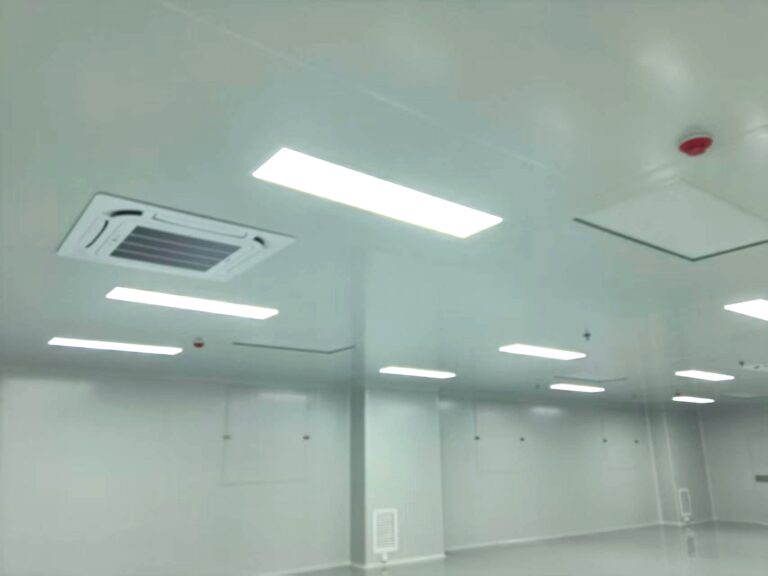
In 2026, with the continuous upgrading of industrial production standards and the tightening of industry compliance requirements, small and medium-sized factories (SMEs) are increasingly focusing on cleanroom construction to improve product quality and meet market access standards.
However, unlike large enterprises with sufficient budgets and professional teams, SMEs often face dilemmas such as limited funds, insufficient professional experience, and difficulty in balancing construction costs and compliance requirements. This article focuses on the 2026 small and medium factory cleanroom construction plan, providing practical guidance and industry insights to help SMEs build cost-effective, compliant, and practical cleanrooms.
1. Pre-Construction Preparation: Clarify Needs and Avoid Blind Investment
The core of the 2026 small and medium factory cleanroom construction plan lies in “demand-oriented, cost-control” rather than blind pursuit of high standards. Before construction, SMEs must first clarify two core points: production process requirements and industry compliance standards, which directly determine the cleanroom level, equipment configuration, and construction scale.
For most SMEs in electronics assembly, food processing, and daily chemical industries, ISO 8-level (100,000-level) cleanrooms can meet basic production needs, while pharmaceutical and precision component manufacturing may require ISO 7-level (10,000-level) standards. Industry data shows that blind pursuit of higher-level cleanrooms can increase construction costs by 30%-50% without significant improvement in product quality.
In addition, SMEs should conduct on-site inspections of existing plant conditions, including floor height, load-bearing capacity, and surrounding environment, to avoid rework caused by mismatches between the construction plan and the site, which can effectively reduce construction cycles and additional costs.
2. Key Construction Links: Balance Quality, Cost and Efficiency
For SMEs, the 2026 small and medium factory cleanroom construction plan needs to focus on key links to achieve a balance between quality, cost, and efficiency. The three core links that cannot be ignored are cleanroom type selection, material selection, and equipment configuration.
In terms of type selection, modular cleanrooms are more suitable for SMEs. Compared with traditional civil engineering cleanrooms, modular cleanrooms have shorter construction cycles (completed in weeks), detachable and relocatable features, and lower later transformation costs, which are in line with the flexible production needs of SMEs.
In material and equipment selection, cost-effectiveness should be prioritized. For example, choose energy-saving FFU fan filter units and detachable HEPA filters, which not only reduce initial investment but also lower later operation and maintenance costs. At the same time, it is necessary to ensure that materials and equipment meet ISO 14644 standards to avoid compliance risks.
3. Post-Construction Operation: Reduce Maintenance Costs and Ensure Long-Term Stability
Many SMEs ignore post-construction operation and maintenance after completing cleanroom construction, which leads to a rapid decline in cleanroom cleanliness and increased maintenance costs, failing to achieve the expected effect of the 2026 small and medium factory cleanroom construction plan. Post-construction operation and maintenance should focus on regular monitoring and standardized management.
It is recommended that SMEs formulate a regular maintenance plan, including replacing filters every 3-12 months (depending on the cleanroom level) and calibrating temperature, humidity, and differential pressure monitoring equipment regularly. Proper maintenance can extend the service life of cleanroom equipment by 2-3 years and reduce annual maintenance costs by 10%-15%.
In addition, strengthening staff training is crucial. Standardizing the operation of personnel entering and exiting the cleanroom (such as passing through air showers and wearing clean clothes) can reduce pollution risks and maintain the long-term stability of the cleanroom environment.
Conclusion and Outlook for 2026
The 2026 small and medium factory cleanroom construction plan for SMEs is not about “high standards and high investment” but about “scientific matching and cost-effectiveness”. With the continuous development of cleanroom technology, modularization, intelligence, and energy conservation will become the main development trends, providing more cost-effective solutions for SMEs.
For SMEs, scientific formulation of cleanroom construction plans, focus on key construction links, and standardized post-construction operation and maintenance can not only meet industry compliance requirements but also improve product quality and production efficiency. In the future, as the market puts forward higher requirements for product quality, the cleanroom will become an indispensable supporting facility for SMEs to enhance their core competitiveness, and the 2026 small and medium factory cleanroom construction plan will also be continuously optimized to adapt to the development needs of SMEs.