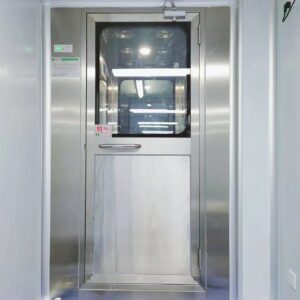
The cleanroom airlock is a critical component in cleanroom construction. Its core function is to block contaminants from non-clean areas from entering the clean zone, ensuring the clean zone meets ISO cleanroom standards and providing a stable, compliant clean environment for high-precision production and laboratory applications such as semiconductors, pharmaceuticals, food processing, and electronics. Proper airlock design and standardized personnel decontamination procedures are central priorities in cleanroom engineering.
I. Core Design Principles of Cleanroom Airlocks
Cleanroom airlock design centers on three objectives: contamination control, operational efficiency, and regulatory compliance. Layout and functional zoning are optimized according to different ISO cleanroom classifications, with key details as follows:
II. Standard Personnel Decontamination Process (for Cleanroom Airlocks)
Personnel represent one of the primary sources of cleanroom contamination. Before entering the clean zone, staff must complete a standardized decontamination sequence in the airlock, following strict cleanroom protocols:
III. Air Shower Selection and Configuration (Matching Airlock Traffic)
As the core decontamination equipment in the cleanroom airlock, air shower selection directly impacts decontamination efficiency and throughput. Sizing must account for maximum workshop occupancy, ISO cleanroom class, and environmental conditions to avoid bottlenecks:
1.Key Selection Criteria
Primary sizing is based on peak personnel flow, with adjustments for cleanroom classification: higher ISO classes require longer shower cycles (typically 15–30 seconds) and additional air shower units to maintain group decontamination efficiency.
2.Typical Configuration Example
For a workshop with 50 personnel, two double-person air showers are recommended, supporting up to six people simultaneously. With a 20-second cycle per person, the entire team can complete decontamination within approximately 15 minutes, enabling prompt cleanroom access and uninterrupted production startup.
3.Material Selection Guidelines
Material choice depends on workshop environment: cold-rolled steel with powder coating is suitable for standard dry workshops, offering cost efficiency and easy cleaning. For humid or corrosive environments (e.g., pharmaceutical and food facilities), stainless steel is preferred for superior moisture resistance, corrosion protection, and heat resistance, extending service life and preventing particle release from rusting.
IV. Conclusion
Cleanroom airlock design and personnel decontamination processes are foundational to reliable cleanroom operation, directly influencing ISO cleanliness compliance, operational efficiency, and production regulatory adherence.
By following the principles of zoned isolation and closed-loop workflow, implementing standardized gowning, hand disinfection, and air shower protocols, and configuring air showers matched to personnel volume and site conditions, cleanrooms effectively block dust, microbes, and other contaminants from non-clean areas, maintaining stable, certified cleanroom environments.