Cleanroom flooring is the core foundation for ensuring the overall cleanliness, anti-pollution and anti-interference performance of a cleanroom. It must meet key requirements such as dust-free, easy cleaning and wear resistance.
Classification of Cleanroom Flooring System
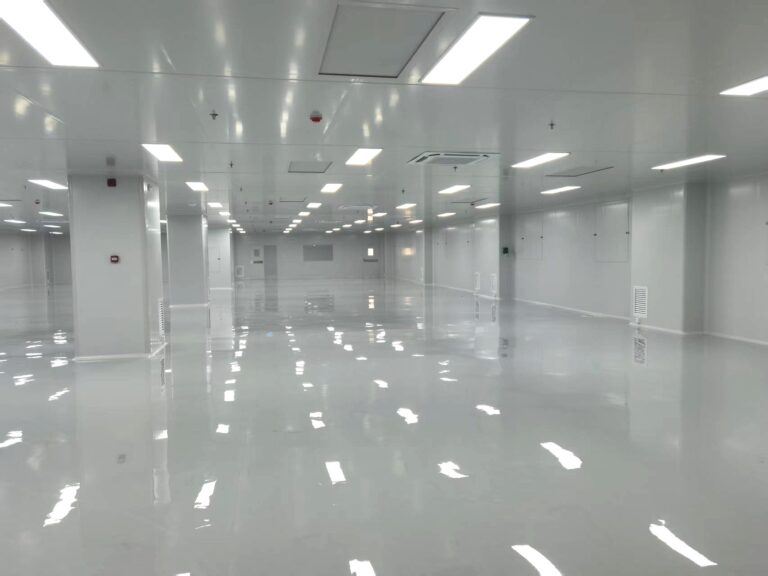
1.Epoxy Flooring
It is a mainstream material for cleanroom flooring, featuring a smooth and seamless surface, easy cleaning, excellent acid and alkali resistance, and outstanding wear resistance. It is convenient to construct and cost-effective, making it the most widely used cleanroom flooring material.
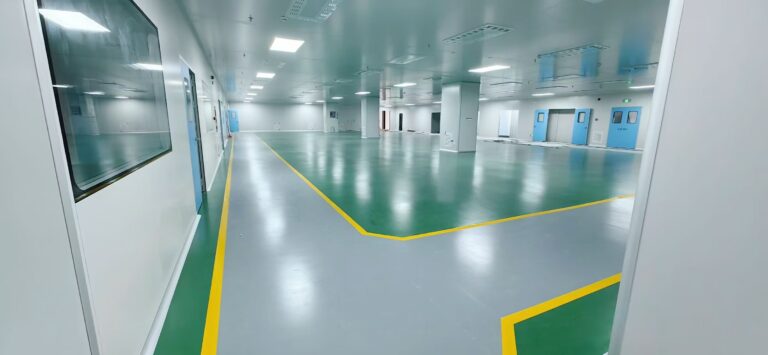
2.PVC Cleanroom Flooring
Flexible and eco-friendly material, odorless, waterproof and non-slip, supports seamless splicing, easy to clean and maintain, with good sound insulation. Suitable for scenarios with high cleanliness requirements.
3. Anti-static Flooring
Designed for electrostatic-sensitive environments, it can effectively discharge static electricity, avoiding interference with equipment operation or product damage caused by static. Types include anti-static epoxy flooring and anti-static PVC flooring.
Suitable for Cleanliness Classes and Industry Scenarios
1. Epoxy flooring: Suitable for class 10,000 to class 100 cleanrooms. Widely used in electronics, pharmaceuticals, food processing, chemicals and other industries, balancing cleanliness requirements and durability.
2. PVC cleanroom flooring: Suitable for class 1,000 to class 100 cleanrooms. Ideal for pharmaceutical cleanrooms, laboratories, food aseptic workshops and other scenarios requiring frequent cleaning and high environmental standards.
3. Anti-static flooring: Suitable for class 1,000 to class 100 cleanrooms. Mainly used in electronics, semiconductors, precision instruments and other electrostatic-sensitive industries to ensure production safety and product quality.
Notes on Cleanroom Flooring System
To ensure the service life of cleanroom flooring and the overall performance of the cleanroom, the following points should be noted:
1. Selection: Choose the appropriate cleanroom flooring material according to the cleanroom class and industry requirements to avoid performance issues caused by improper selection.
2. Construction: Ensure the base ground is flat, dry and dust-free before construction to guarantee quality from the source and prevent bulging or cracking later.
3. Usage: Avoid scratches from sharp objects, impacts from heavy loads, and direct pouring of corrosive liquids. Wear dedicated dust-free shoes when entering the cleanroom.
4. Maintenance: Clean regularly with neutral detergent, avoid abrasive cleaners, and repair damage promptly to prevent impurities from affecting cleanliness.