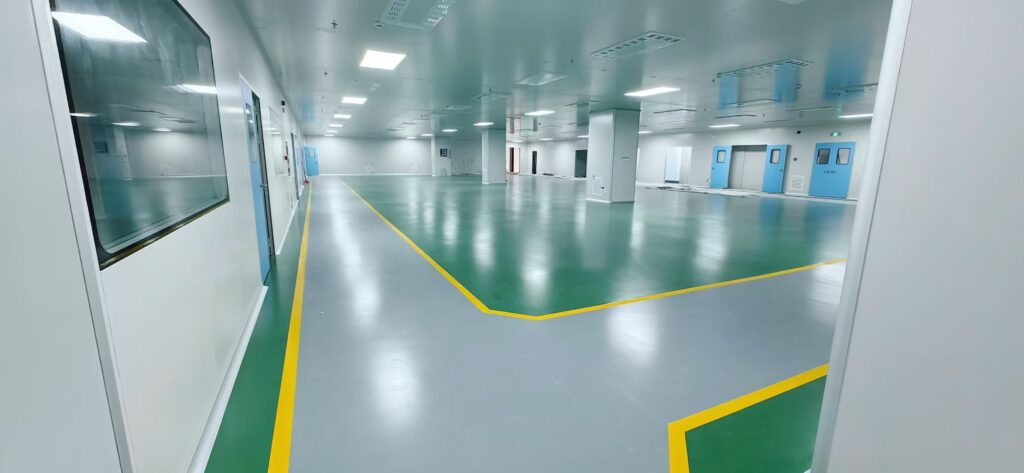
Selecting the classification for a pharmaceutical cleanroom is fundamentally about aligning with pharmaceutical production process requirements and GMP guidelines. It is advisable to make this decision by comprehensively considering the pollution sensitivity of the production stage, the product dosage form, and the associated exposure risks.
I. Core Basis for Determination
It is recommended to use the ISO 14644-1 cleanroom classification standard as a reference to match different pharmaceutical production processes. For high-risk operation areas, it is generally advisable to control particle concentration and microbial limits at lower levels, whereas requirements can be appropriately relaxed for low-risk areas.
II. Classification Selection by Scenario
1. Aseptic Formulation Core Zone
For processes such as aseptic filling, freeze-drying stoppering, and aseptic batching, it is advisable to adopt ISO Class 5 under dynamic conditions. This helps ensure that suspended particles and microbial contamination remain at extremely low levels, thereby effectively reducing the risk of product contamination.
2. Aseptic Formulation Auxiliary Zone
For areas like aseptic gowning and material buffer zones, consideration can be given to using ISO Class 7. This serves as a transitional protection for the core zone to reduce contaminants introduced by personnel and materials.
3. Non-Aseptic Formulation Production Zone
For processes involving solid formulations, such as granulation, tableting, and coating, selecting ISO Class 8 usually meets requirements based on product characteristics. This also helps better balance production safety with cost investment.
4. Warehousing and Utility Zone
Strict cleanroom classification control is generally not required here. It is recommended to maintain a cleanliness environment of 100,000 or 300,000 grade (or ISO 8/9 equivalent), as long as it ensures the necessary conditions for material storage.
III. Key Considerations
When selecting a classification, it is beneficial to simultaneously consider airflow patterns (such as unidirectional and turbulent flow), equipment layout, and personnel operating procedures. This helps better ensure that the cleanroom continuously meets the set cleanliness standards during dynamic production processes.