
Electronic manufacturing is becoming increasingly precise, placing higher requirements on production environments. Processes such as SMT assembly, PCB manufacturing, semiconductor packaging, and precision electronic component production are highly sensitive to airborne particles and electrostatic discharge.
Many manufacturers face similar challenges when building or upgrading an electronics cleanroom:
- Product defects caused by particle contamination;
- Component damage caused by electrostatic discharge;
- Unstable cleanliness performance after installing cleanroom equipment;
- Poor equipment compatibility between different suppliers.
The key to solving these problems is not simply installing more equipment, but selecting suitable electronics cleanroom equipment based on production processes, cleanliness requirements, and contamination control needs.
This guide explains the essential cleanroom equipment used in electronics manufacturing and how each system helps maintain a stable production environment.
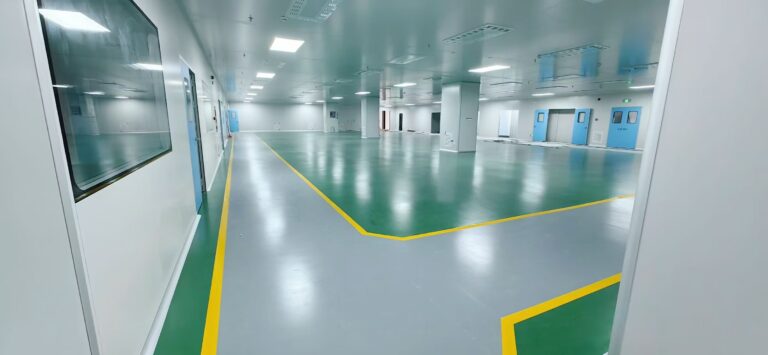
Why Do Electronics Manufacturing Facilities Need Cleanroom Equipment?
Electronic products contain increasingly smaller and more sensitive components. During manufacturing, even small particles can affect product reliability.
For example, contamination during PCB assembly or precision electronic component processing may lead to:
- Poor soldering performance;
- Electrical connection problems;
- Reduced product reliability;
- Increased production defects.
Besides particle control, electronics manufacturers also need to consider electrostatic discharge protection.
Static electricity generated by personnel, packaging materials, and equipment operation may damage sensitive electronic components. Therefore, modern electronics cleanrooms usually require both air cleanliness control and ESD protection measures.
Common Challenges in Electronics Cleanroom Environments
1. Particle Contamination Affects Product Quality
Airborne particles are one of the main contamination sources in electronic manufacturing.
Dust can enter the cleanroom through:
- Personnel movement;
- Material transfer;
- External air infiltration;
- Equipment operation.
A complete contamination control strategy requires cooperation between personnel purification equipment, material transfer systems, and air filtration equipment.
2. Electrostatic Discharge Creates Hidden Risks
Many electronic components are sensitive to static electricity.
Without proper ESD protection, electrostatic discharge may cause:
- Component failure;
- Reduced product lifespan;
- Unstable product performance.
Common ESD control methods include:
- Anti-static flooring;
- Grounding systems;
- ESD workstations;
- Ionizing air solutions.
3. Improper Equipment Selection Causes Unstable Cleanroom Performance
A common mistake is selecting individual equipment without considering the entire cleanroom system.
For example:
- The number of FFUs should match room size and cleanliness requirements;
- Air showers should match personnel flow and entrance design;
- Clean benches should fit specific production operations;
- Clean booths should be designed according to local cleanliness requirements.
A well-designed electronics cleanroom requires proper equipment coordination rather than simply choosing higher-specification products.
Essential Electronics Cleanroom Equipment
An air shower is commonly installed at the entrance of an electronics cleanroom.
Before entering the controlled environment, personnel may carry dust particles on clothing surfaces. An air shower uses filtered high-speed airflow to remove loose particles and reduce contamination entering the clean area.
When selecting an air shower, manufacturers should consider:
- Stainless steel construction;
- HEPA filtration performance;
- Air velocity stability;
- Door interlock system;
- Optional ESD ionizing function.
FFU Fan Filter Unit: Provide Stable Clean Air Supply
FFU Fan Filter Unit is one of the most commonly used cleanroom equipment solutions in electronics manufacturing.
An FFU integrates a fan and filtration module to supply filtered air directly into the clean area.
FFUs are widely applied in:
- Clean booths;
- SMT production lines;
- Precision assembly areas;
- Modular cleanrooms.
Compared with traditional centralized air supply systems, FFUs provide flexible installation and easier expansion, making them suitable for electronics manufacturers requiring adjustable cleanroom layouts.
Clean Booth: Flexible Local Cleanroom Solution
For existing factories that need partial cleanliness improvement, a clean booth provides a practical solution.
A clean booth creates a controlled clean area by combining:
- FFU ceiling modules;
- Cleanroom frames;
- Anti-static curtains or panels.
Clean booths are widely used because they require less construction time and provide flexible layout adjustment.
Clean Bench: Protect Critical Assembly Processes
Some electronic manufacturing processes require localized high cleanliness protection.
When selecting a clean bench, manufacturers should consider:
- Airflow uniformity;
- HEPA filtration efficiency;
- Working area design;
- ESD protection requirements.
Pass Box: Control Material Transfer Contamination
Materials entering a cleanroom can introduce contamination risks.
A pass box allows controlled transfer of small items between clean and non-clean areas while reducing unnecessary door opening.
Typical applications include:
- PCB transfer;
- Electronic component transfer;
- Tool transfer.
Important features include:
- Stainless steel construction;
- Good sealing performance;
- Door interlock system.
How to Select the Right Electronics Cleanroom Equipment?
Selecting cleanroom equipment requires consideration of several factors:
Production Process
Different processes require different cleanliness levels.
For example:
- SMT assembly may require controlled dust environments;
- Precision electronic assembly may require localized clean areas;
- Sensitive components may require additional ESD protection.
Cleanliness Requirements
Equipment selection should match the required cleanroom classification and airflow design.
The number of FFUs, filtration efficiency, and airflow organization should be calculated according to actual requirements.
Long-Term Operation Cost
Cleanroom equipment operates continuously in many factories.
Besides initial investment, manufacturers should consider:
- Energy consumption;
- Filter replacement frequency;
- Maintenance requirements;
- Equipment reliability.
Why Choose Baihong Purification for Electronics Cleanroom Equipment?
Dongguan Baihong Purification Equipment Co., Ltd. was established in 2011 and specializes in the research, development, and manufacturing of cleanroom equipment.
The company provides cleanroom solutions including air showers, cargo air showers, pass boxes, FFU fan filter units, clean booths, clean benches, and air filtration products.
With applications in electronics manufacturing, precision processing, and new energy industries, Baihong Purification focuses on providing reliable cleanroom equipment for different production environments.
FAQ
What cleanroom equipment is commonly used in electronics manufacturing?
Common equipment includes air showers, FFU fan filter units, clean booths, clean benches, pass boxes, and HEPA filtration systems.
Why are FFUs widely used in electronics cleanrooms?
FFUs provide flexible and independent air filtration, making them suitable for modular cleanrooms, clean booths, and local high-cleanliness areas.
Do electronics cleanrooms require ESD protection?
Yes. Many electronic components are sensitive to static electricity, so ESD control measures are often required.
Can an existing electronics factory be upgraded into a cleaner production environment?
Yes. Local upgrades can be achieved through clean booths, FFUs, clean benches, and other cleanroom equipment solutions.
Conclusion
Electronics cleanroom equipment plays an important role in controlling particle contamination, protecting sensitive components, and maintaining stable manufacturing conditions.
Air showers help control personnel contamination, pass boxes reduce material transfer risks, FFUs provide stable clean airflow, and clean benches protect critical operations.
By selecting suitable equipment based on production requirements, electronics manufacturers can build cleaner, more reliable, and more efficient production environments.