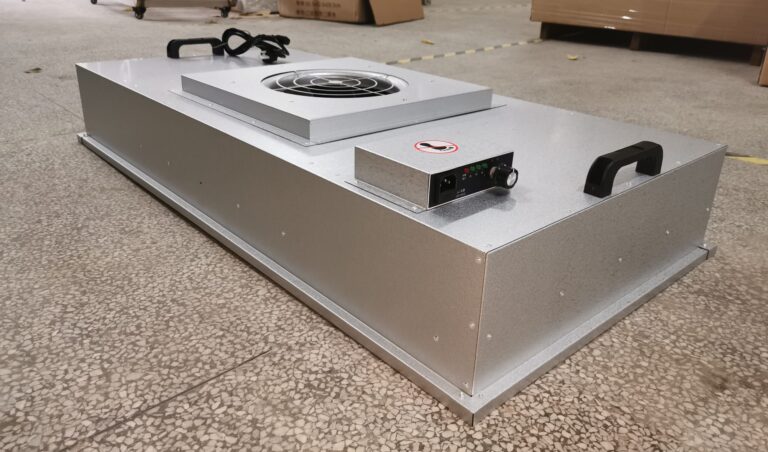
I. What is an FFU? The Core Equipment of Cleanroom Air Supply Systems
An FFU (Fan Filter Unit) is the core equipment of cleanroom air supply systems, widely used in ISO 5 and ISO 6 cleanrooms in industries such as electronics, food, and pharmaceuticals. Its core function is to continuously deliver clean air to controlled spaces and stably maintain environmental cleanliness, making it a critical device for ensuring compliant cleanroom operation.
For cleanroom operating enterprises, FFU cost control is a core link in cost reduction and efficiency improvement. Many buyers often focus only on the equipment’s purchase price when selecting FFUs, but easily overlook hidden costs throughout the entire lifecycle, ultimately incurring unnecessary additional expenses. This article, combined with practical usage scenarios in the cleanroom industry, breaks down the complete lifecycle cost structure of FFUs in detail and shares practical methods for rational cost control, helping enterprises achieve efficient cost reduction while ensuring cleanliness.
II. FFU Lifecycle Cost Structure: Purchase Price Accounts for Only 15%
In terms of cost structure, the total lifecycle cost of an FFU is not determined solely by the purchase price, but consists of three components:
- One-time purchase cost: Accounts for only about 15% of the total cost, the most intuitively perceived cost item for enterprises;
- Long-term operating electricity cost: Accounts for as high as around 75%, the core factor affecting total costs;
- Filter replacement and equipment maintenance cost: Accounts for approximately 10%, including hidden expenses such as consumable procurement and operation & maintenance labor.
This structure clearly shows that simply lowering the purchase price cannot fundamentally control the total cost of FFUs. In fact, it may even lead to a significant increase in later electricity and maintenance costs due to insufficient equipment performance, indirectly affecting the stable operation of the cleanroom and resulting in a net loss.
III. Core Factors Affecting FFU Operating Costs
In the actual operation of cleanrooms, filter resistance is the key factor affecting FFU power consumption:
If the filter has excessive resistance, the fan must consume more power to maintain the rated air supply volume, which not only directly increases electricity expenses but also accelerates fan aging and shortens equipment service life. Meanwhile, insufficient filter dust-holding capacity will greatly increase replacement frequency, raising consumable procurement costs and interrupting continuous production in clean workshops due to frequent replacements, resulting in additional production losses.
In addition, the energy efficiency of the fan motor and the scientific nature of operation & maintenance management also directly affect the total lifecycle cost of FFUs, making them indispensable links for enterprises in cost control.
IV. 3 Core Methods for Controlling FFU Lifecycle Costs
To reasonably control the total lifecycle cost of FFUs, start with the following three core dimensions, covering the entire process of procurement and operation & maintenance:
1. Select Low-Resistance, High-Dust-Holding Filters to Reduce Operating Costs at the Source
Low-resistance, high-dust-holding filters can effectively reduce filter resistance and lower fan operating load while ensuring compliance with filtration efficiency, thereby directly reducing equipment power consumption. At the same time, higher dust-holding capacity can significantly extend filter service life, reduce replacement frequency, and lower consumable procurement costs, optimizing the long-term operating costs of cleanrooms from the source.
2. Establish a Scientific Filter Replacement Cycle to Avoid Waste from Over-Replacement
Some enterprises replace filters before they reach their service life in advance to ensure cleanliness, resulting in unnecessary cost waste. It is recommended to formulate a scientific replacement cycle by monitoring real-time operating data such as filter resistance and differential pressure, combined with the cleanroom’s usage scenarios and cleanliness level requirements. This maximizes filter usage value and reduces cost losses from over-replacement while ensuring a compliant clean environment.
3. Prioritize EC Brushless DC Motors for Cost-Effective Long-Term Cost Reduction
EC brushless DC motors are an upgraded configuration for FFU fans. Compared with traditional AC motors, they offer higher operating efficiency and lower power consumption, significantly reducing electricity expenses during long-term use. Additionally, EC motors have a longer service life and better operational stability, maintaining a consistent air supply volume and reducing the impact of air flow fluctuations on the cleanroom environment.
Although the upfront purchase cost of EC motors is slightly higher, their comprehensive usage cost is more economical from a lifecycle perspective, fully meeting the long-term stable operation needs of cleanrooms and making them the preferred solution for enterprise cost reduction.
V. Conclusion: Move Beyond the Purchase Price Myth, Focus on Lifecycle Management
Overall, FFU cost control is a systematic task. Rational procurement and operation & maintenance require balancing the full-process costs of upfront procurement and later operation. For cleanroom enterprises, moving beyond the myth of “only looking at purchase price” and focusing on FFU lifecycle cost control enables efficient cost reduction while ensuring stable and compliant cleanroom operation, providing strong support for long-term enterprise operations.