
Why Air Shower Selection Matters
Many companies focus only on price when purchasing cleanroom equipment. However, improper air shower selection can lead to insufficient cleaning performance, personnel congestion, increased maintenance costs, and future upgrade limitations.
A well-planned air shower selection process should consider cleanliness requirements, personnel flow, installation space, and long-term operational needs.
The first step in air shower selection is understanding your cleanroom classification.
Different cleanroom standards require different contamination control levels:
| Cleanroom Class | Typical Application |
|---|---|
| ISO 5 | Semiconductor Manufacturing |
| ISO 6 | Precision Electronics |
| ISO 7 | Medical Devices |
| ISO 8 | Food Processing |
Higher cleanroom classifications often require stricter contamination control and more efficient air shower systems.
When evaluating air shower selection criteria, always match the equipment performance with the cleanroom cleanliness level.
Key Factor 2: Personnel Flow Requirements
Personnel traffic directly affects air shower selection.
For facilities with low daily traffic, a standard single-person air shower may be sufficient.
For production environments with shift changes and high personnel movement, larger or multi-person air showers can significantly improve efficiency.
Important considerations include:
- Number of users per hour
- Peak shift traffic
- Available waiting space
- Required throughput capacity
Proper air shower selection ensures smooth personnel movement while maintaining contamination control.
Key Factor 3: Air Velocity and Blowing Efficiency
Air velocity is one of the most important air shower specifications.
Most industrial cleanroom air showers operate with air speeds between 20 and 25 m/s.
Adequate air velocity helps remove particles from clothing surfaces effectively without causing discomfort to personnel.
When reviewing air shower selection criteria, pay close attention to:
- Nozzle arrangement
- Airflow coverage
- Blowing angle
- Air circulation efficiency
A well-designed airflow system improves overall cleaning performance.
Key Factor 4: Filtration System Performance
The filtration system is the core of every cleanroom air shower.
Most high-quality air showers utilize HEPA filters with filtration efficiency of 99.99% at 0.3 microns.
For critical manufacturing environments, filter quality directly influences contamination control performance.
When conducting air shower selection, evaluate:
- HEPA filter efficiency
- Filter replacement accessibility
- Maintenance requirements
- Fan system reliability
Reliable filtration ensures consistent cleanroom protection.
Key Factor 5: Door Configuration and Safety Features
Door configuration is often overlooked during air shower selection.
Common options include:
Single-Person Air Shower
Suitable for low-traffic facilities.
Double-Person Air Shower
Ideal for medium-volume personnel movement.
Unequal Double Door Air Shower
Designed for locations with limited installation space or special equipment handling requirements.
In addition, interlocking systems should prevent both doors from opening simultaneously, minimizing contamination risks.
Emergency release functions should also be included to ensure personnel safety.
Key Factor 6: Installation Space and Future Expansion
Many facilities focus only on current requirements during air shower selection.
However, future expansion should also be considered.
Modular air shower designs provide several advantages:
- Easier transportation
- Faster installation
- Flexible length adjustment
- Simplified maintenance
- Lower renovation costs
For growing businesses, modular systems offer greater long-term value.
Air Shower Selection by Industry
Semiconductor Industry
Requires strict particle control and high-efficiency filtration.
Pharmaceutical Industry
Must comply with GMP and contamination control requirements.
Medical Device Manufacturing
Demands stable cleanliness performance and reliable operation.
Food Processing Industry
Focuses on hygiene management and personnel contamination prevention.
Different industries have unique air shower selection requirements. Choosing equipment based on actual applications improves overall operational effectiveness.
Common Air Shower Selection Mistakes
Many buyers make the following mistakes:
- Selecting equipment based solely on price
- Ignoring future expansion needs
- Underestimating personnel traffic
- Choosing inadequate filtration systems
- Overlooking maintenance accessibility
Avoiding these issues can significantly improve long-term cleanroom performance.
Why Choose Baihong Purification?
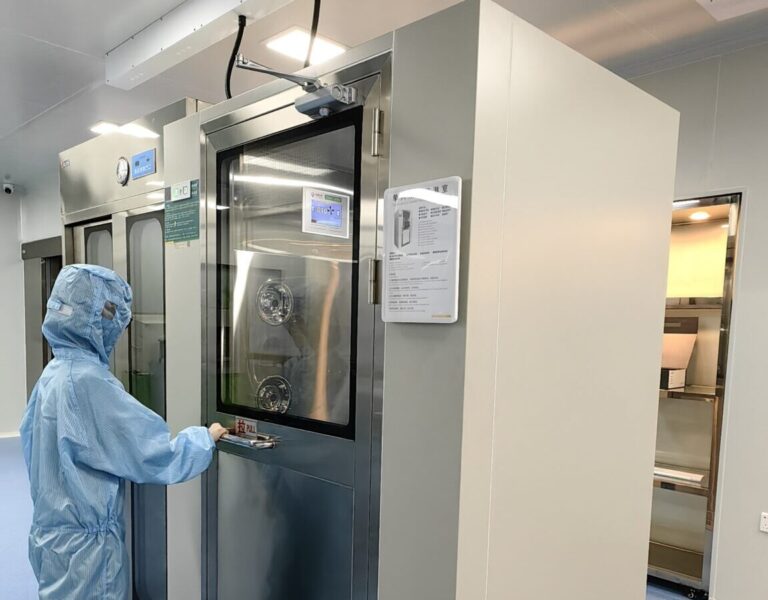
Baihong Purification specializes in cleanroom equipment manufacturing and cleanroom solutions.
Our air showers feature:
- Modular assembled structures
- Reliable interlocking systems
- High-efficiency HEPA filtration
- Flexible customization options
- Experience serving semiconductor, pharmaceutical, medical device, food, and precision manufacturing industries
Our goal is to provide practical and reliable air shower solutions that support long-term cleanroom performance.
FAQ
1. How do I select the right air shower size?
The appropriate size depends on personnel flow, installation space, and cleanroom operational requirements.
2. What air velocity is recommended for an air shower?
Most industrial air showers operate effectively between 20 and 25 m/s.
3. Are HEPA filters necessary in an air shower?
Yes. HEPA filtration is essential for removing airborne particles and maintaining cleanroom cleanliness.
4. Can air showers be customized?
Yes. Dimensions, materials, door configurations, and control systems can often be customized.
5. Which industries commonly use air showers?
Semiconductor, pharmaceutical, medical device, electronics, food processing, optics, and precision manufacturing industries frequently use air showers.