
When comparing cleanroom air showers, many buyers notice a common issue:
Two products may look almost identical, use stainless steel construction, and have similar specifications — but their prices can be very different.
Why?
The difference usually comes from the details that are not visible from the outside.
For cleanroom equipment, price is often influenced by material specifications, component selection, manufacturing standards, and long-term serviceability.
Before choosing an air shower supplier, it is important to understand what actually affects the cost.
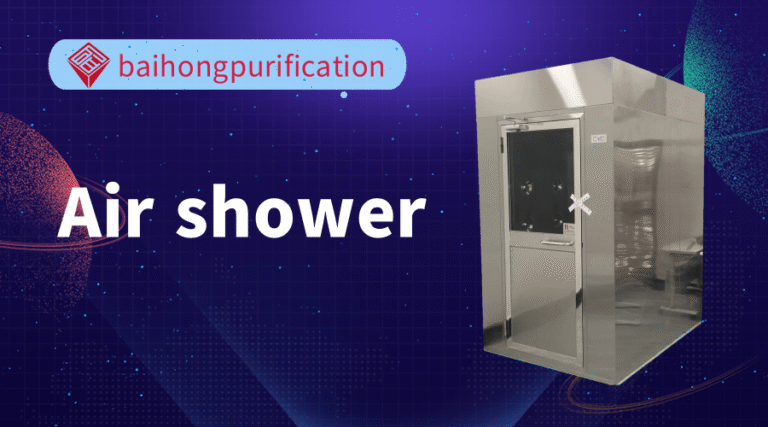
1. Material Specification Is More Than Just “Stainless Steel”
Many air showers are described as “304 stainless steel,” but this information alone is not enough for comparison.
Buyers should also check:
- Stainless steel grade;
- Standard thickness specification;
- Surface finishing method.
For example, Baihong Purification air showers use 304 stainless steel with a standard thickness of 1.0mm and fingerprint-resistant surface treatment.
This helps improve daily cleaning efficiency in environments where frequent wiping and sanitation are required.
The external cabinet structure also affects equipment stability. Different cold rolled steel specifications can influence the overall rigidity and durability of the unit.
2. Airflow Components Affect Actual Performance
The main function of an air shower is to remove particles from personnel or materials before entering a clean area.
This depends on several key components:
- Fans;
- HEPA filters;
- Nozzles;
- Return air design.
The fan provides airflow power, while the nozzle design determines airflow coverage and direction.
Baihong Purification air showers use stainless steel adjustable nozzles and domestic Lantian brand low-noise fans. The fan configuration is matched with the equipment design to achieve stable airflow performance.
3. Nozzles and Internal Structure Create Hidden Differences
Two air showers may have similar external appearances but different internal designs.
For example, nozzle materials can vary between models.
When evaluating an air shower, buyers should confirm:
- Nozzle material;
- Number of nozzles;
- Adjustable angle capability;
- Airflow layout.
A well-designed nozzle system helps create more consistent air coverage inside the chamber.
4. HEPA Filtration and Clean Air Quality
The filtration system is another important factor affecting air shower configuration.
A common HEPA specification used in cleanroom applications is:99.99% efficiency at 0.3μm particles.
The selected filter configuration should match the cleanroom requirements, industry standards, and operating environment.
During purchasing, companies should confirm filter specifications, replacement methods, and maintenance requirements.
5. Control System and User Experience
Control systems are another area where air shower prices can vary.
Basic models may use simple button controls, while advanced systems can include:
- Touchscreen operation;
- Adjustable shower time;
- Password protection;
- Voice prompts.
Baihong Purification air showers use OLED voice touchscreen panels with chemically strengthened glass surfaces, providing easier operation and equipment management.
For factories with multiple operators or frequent personnel changes, user-friendly controls can reduce management difficulties.
6. Safety Features and Long-Term Maintenance
Besides airflow performance, safety and maintenance should also be considered.
Important features include:
- Electronic door interlock;
- Emergency stop button;
- Reliable door closing components.
For example, a stable interlock system helps prevent both doors from opening at the same time, maintaining separation between clean and non-clean areas.
Long-term support is also important. Companies should consider whether the manufacturer provides operation guidance, technical support, and replacement service after installation.
7. Compare Configuration, Not Only Price
When selecting a cleanroom air shower, comparing only the quotation is not enough.
A better evaluation should include:
| Item | What to Check |
|---|---|
| Stainless steel | Grade, standard thickness, surface treatment |
| Cabinet structure | Material specification and design |
| Nozzles | Material and airflow layout |
| Fan system | Brand and performance parameters |
| HEPA filter | Efficiency and specification |
| Control system | Functions and operation method |
| Maintenance | Manufacturer support |
The price difference between air showers is usually the result of different configurations and manufacturing standards.
For cleanroom projects, the right equipment choice should balance initial investment, operating stability, and long-term maintenance.
A reliable air shower is not simply the lowest-priced option — it is the one that matches the cleanroom requirements and provides consistent performance over time.